South East Antrim UDA 'in talks' to end paramilitarism

 BBC
Mediators have been speaking to the leadership of South East Antrim UDA about abandoning paramilitarism, sources have told BBC Spotlight.
The group has become notorious for its involvement in organised crime.
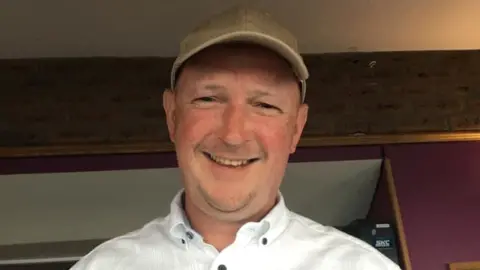
Martin Quinn, who believes its members were behind the murder of his brother Glenn in Carrickfergus in 2020, said he welcomed the move.
However, he believes the group should show its intent by allowing witnesses to the murder to come forward.
"Every honest, decent person that lives in the area that South East Antrim covers would obviously love to see an end to organised crime and we would welcome it," he said.
"But they [South East Antrim UDA] are not going to be allowed to walk away from everything they've done.
"The entire community is revulsed about it, so if they want to prove to the community, they want to prove to the government, then give these people up."
The justice minister said she thinks people need to stop meeting representatives of paramilitary groups.
Naomi Long said: "That may have been of a time and for a time but we are now 26 years on (since the Good Friday Agreement) and the time for those organisations to have any standing in the community has gone."
 PSNI
A source described the discussions with South East Antrim UDA representatives as "highly sensitive".
It is unclear how advanced the talks are, but they have been viewed as substantial enough to have persuaded mediators of an element of good faith from the paramilitary group.
Thirty years after the ceasefires, the South East Antrim UDA talks could be viewed as momentum for transition away from paramilitarism among the loyalist groups.
In November, the UVF stood down senior members of its notorious east Belfast faction, including replacing its leader Stephen Matthews.
Sources told Spotlight the decision to replace the group's leadership was because of the group's continued immersion in organised crime.
They said there was also a perceived failure of the leadership to remove it from the east Belfast group.
 Pacemaker
As part of the investigation, Spotlight interviewed a senior UVF member.
"At one stage, the east Belfast battalion was the strongest, most capable and best armed," he said.
"People who came after brought that group into disrepute.
"I don't believe Stephen Matthews was guilty of bringing the organisation into disrepute and I don't think he was a drug dealer, but the problem was that it happened on his watch and the buck has to stop somewhere."
In a statement issued through a spokesperson, Mr Matthews said he had never been the leader of the east Belfast UVF, and therefore could not have been removed from the role.
Prof Marie Breen-Smyth, an academic who has been speaking to loyalist leaders about transition, saw the November statement as a positive step.
"There is a way of interpreting that, which is that the UVF are making themselves transition ready," Prof Breen-Smyth said.

"I think that the problems with the east Belfast brigade are well established and I think the UVF leadership were affected by that."
However, Stormont's justice minister, Naomi Long, whose constituency is Belfast East, is sceptical the move has any wider significance.
She said: "I have heard alternative analysis that this is about the UVF in east Belfast being out of favour with the UVF elsewhere and it's got nothing to do with transition at all."
The talks between South East Antrim UDA leadership and mediators come amid calls for a fresh process to try to end paramilitarism.
The Independent Reporting Commission, which monitors progress towards ending paramilitarism, has called for the appointment of an interlocutor between the government and the groups.
Prof Breen-Smyth supports the idea and told Spotlight "there are people from the old guard in the paramilitaries who want to put clear blue water between themselves and organised crime".
"Those are the people I think we ought to be facilitating to leave the field with some kind of dignity and with secure and safe arrangements", she said.
"That means then that organised crime is isolated and we can point the full force of the law at it."

The Department of Justice's current policy on dealing with loyalist groups is a focus on criminal justice, programmes for those affected by paramilitarism and offering a pathway to those who want to leave paramilitary groups.
The justice minister is sceptical that the appointment of an interlocutor is a worthwhile additional element.
She said: "I'm not opposed to the idea of an interlocutor but I do think there is a risk and I think this risk is under assessed, and that is by providing for example, an interlocutor or some particular pathway for these organisations, that we give them a credibility and a standing that they do not deserve."

Spotlight: 30 Years Behind the Mask is available to watch on the BBC iPlayer and will be on BBC One Northern Ireland at 22:40 on Tuesday 12 March.

