
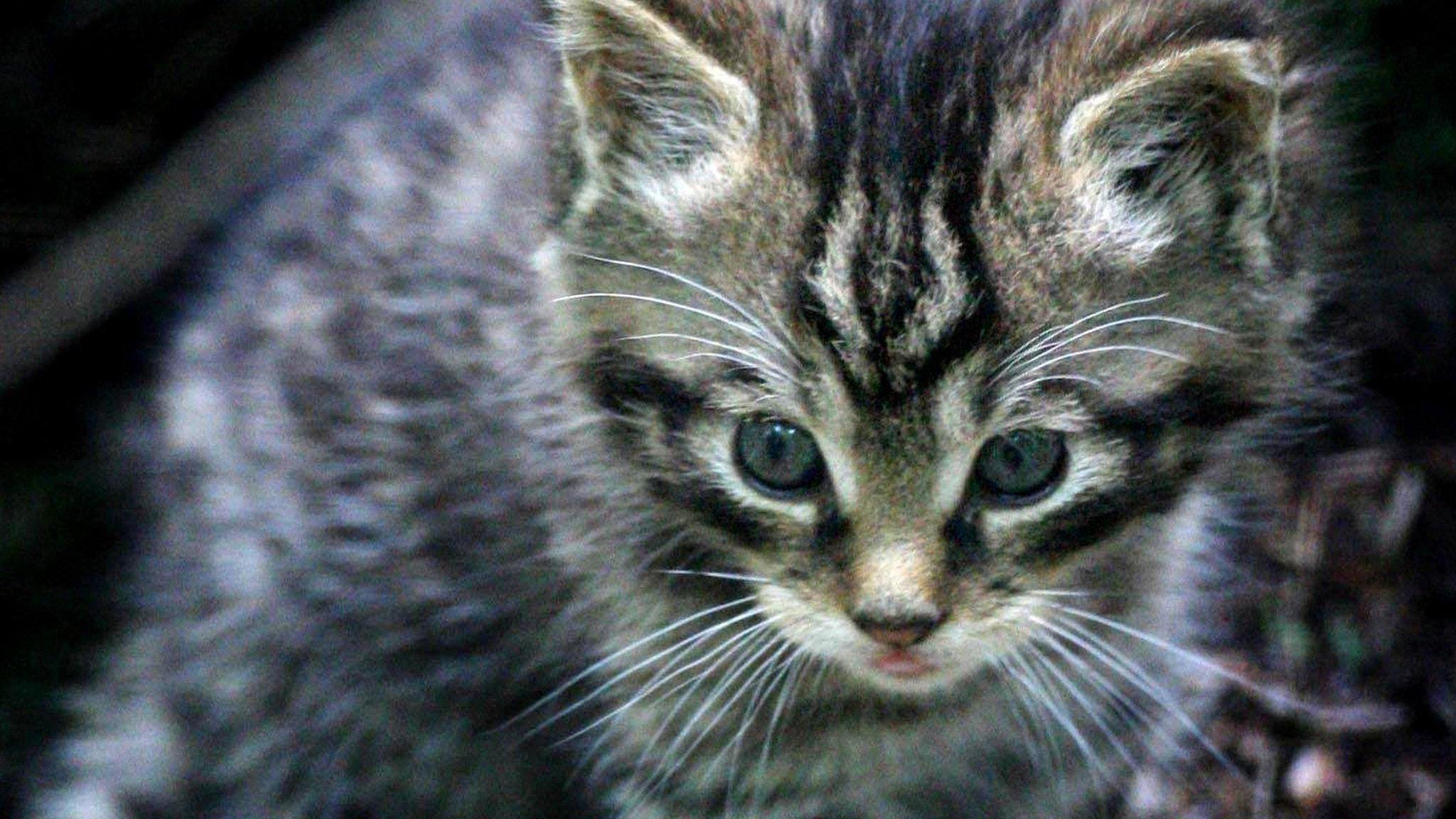
The Scottish wildcat is among the world's most endangered species
Hundreds of square miles have been added to a Scottish wildcat "safe haven" in the west Highlands.
Organisers of the Wildcat Haven project said the area had been expanded by neutering 100 local domestic cats.
Breeding with pet and feral cats is among the most serious threats to wildcats as it results in hybridisation and also exposes them to diseases.
The latest neutering work has extended the haven by 300 sq miles to total of 800 sq miles.
The project's organisers said that the zone covered Ardnamurchan, Sunart, Morvern and Moidart.
They hope in future to extend the haven towards Fort William.

The number of wildcats has declined because of cross-breeding and disease
The chief scientist on the project, Dr Paul O'Donoghue, said: "It's all about hybridisation. The wildcat is a very capable survivor and prefers to breed with other wildcats, but it's so outnumbered by domestic cats that hybridisation is inevitable.
"This means that over a few generations, those wildcat genes are lost, and you're just left with domestic and feral cats causing big problems for prey species and themselves."

The Wildcat Haven project hopes to extend its range towards Fort William
The Scottish wildcat is among the world's most endangered animals.
The Wildcat Haven is separate from Scottish Wildcat Action, a project involving six priority areas - Strathpeffer, Strathbogie, Strathavon, Morvern, North Strathspey and the Angus Glens.
- Published5 February 2016

- Published27 January 2016

- Published20 February 2015

- Published6 February 2015
- Published23 July 2014


