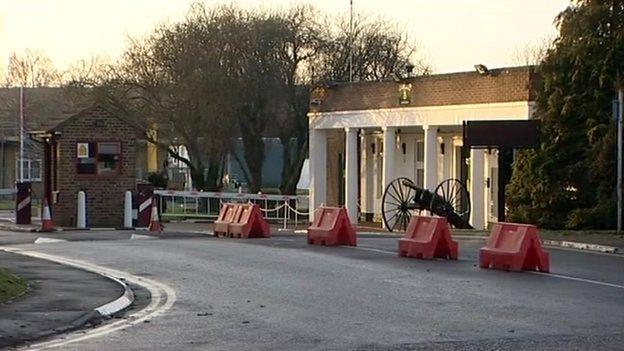
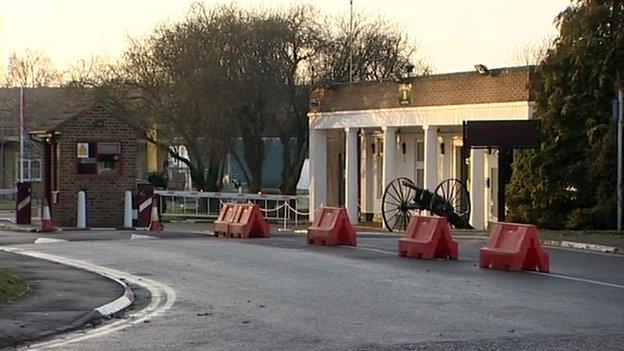
Libyan recruits arrived for training at Bassingbourn Barracks in Cambridgeshire in June 2014
Nearly 300 security staff were drafted in to stop Libyan cadets absconding from an army base after five trainees committed sex offences in nearby Cambridge, a report shows.
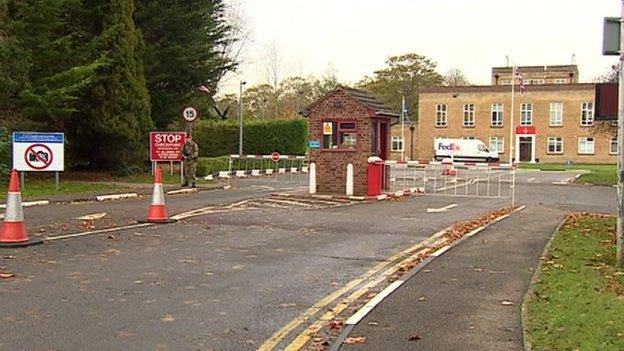
The Ministry of Defence report said only turning Bassingbourn Barracks into a "fortress" could have bolstered security further.
Trainees arrived in June 2014, but by October five had been charged with rape and other sex offences.
About 230 cadets were later sent home.
The MoD report said at the security operation's height, 296 staff were brought in to control the cadets.
Up to 2,000 soldiers had been due to undergo basic infantry and junior command training at the barracks under an agreement reached at last year's G8 summit to support the Libyan government's efforts to improve the security and stability of the country.
Base lockdown
After several breakdowns in discipline, culminating in five cadets being charged with a series of sexual offences against women and the rape of a man on 26 October, a decision was made to cancel the training and the men were sent home in November.

The MoD had given assurances cadets would not be allowed off the base unescorted
The prime minister asked the chief of defence staff to produce a report into the training of the cadets, a full version of which has just been made public.
A summarised version was released in January.
The newly-released full report details the extent of heightened security and a lockdown that ultimately failed.
Bassingbourn guard numbers
28
army guards initially deployed to the barracks in June
87
guards by October following reports of alleged assaults
296 personnel guarding 230 cadets by 30 October
During the four months the cadets were based at the barracks, security was tested on a number of occasions, the report showed.
The MoD had given assurances cadets would not be allowed off the base unless accompanied, however reports of trainees leaving and protests over their allowances tested both army security and local police.

The Libyan troops were the first of 2,000 expected to be trained at the barracks near Cambridge
In mid-August, the defence secretary agreed a package of incentives for good behaviour which included unescorted visits off-base.
But, on 17 October, a series of sexual assaults were reported in Cambridge carried out by men "allegedly of North African appearance", the report said.
Army 'spotters' deployed
Following that, security was increased to what was described in the report as "heightened" level and all visits cancelled.
During this time though, five cadets left the base without permission and carried out a number of sexual assaults and a rape while on an unauthorised visit to Cambridge.
Numbers of security personnel deployed at the barracks had risen from an initial 28 to 87 in October and, finally, 296 by the end of that month - upping the security status to "containment plus", the report said.

The report revealed:
It was understood the chief constable of Cambridgeshire told the policing minister further visits "could not be tolerated as the risk to the public was unacceptable"
A "public safety plan" was implemented outside the base consisting of army patrols at "pinch-points", with army spotters deployed
Despite these measures some cadets still managed to get out of the camp but were intercepted just beyond the perimeter
All cadets had been returned to Libya by 7 November
The security was deemed a "proportionate response to the then known facts about the assaults in Cambridge on 17 October"... but "ultimately inadequate" to prevent "determined trainees" from leaving.

The remaining troops were sent home in the early hours of the morning in November
Responding to the content of the full report, an MoD spokesman said: "As we have previously made clear, we condemn the incidents that took place in Cambridge and Bassingbourn.
"We accept all of the report's recommendations and are implementing the lessons learnt. We have been clear that no general purpose force training will take place at Bassingbourn in future."
However, Lewis Herbert. Labour leader of the city council, said there were still many "unanswered questions" and demanded residents be given a "proper explanation why they [the MoD] ignored the risks to our local communities".
"The MoD totally failed to provide protection for Cambridge residents and Bassingbourn was a ticking time bomb where local residents had a very, very lucky escape," he added.
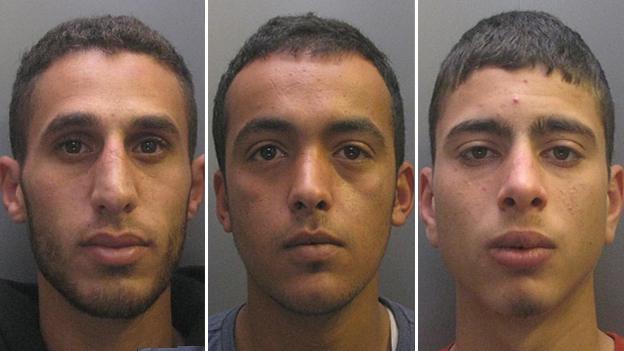
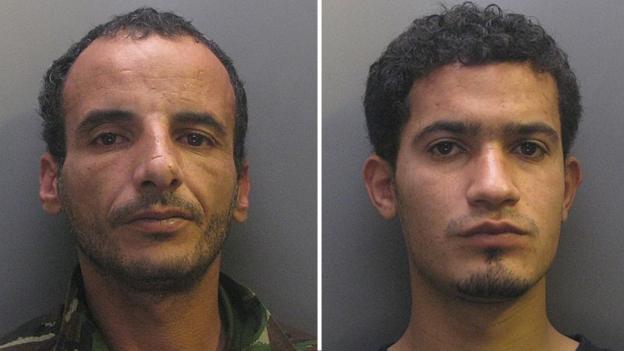
In May, five cadets were jailed for the rape of a man and sexual assaults on women in Cambridge.
- Published18 May 2015
- Published15 May 2015
- Published31 December 2014
- Published30 December 2014
- Published5 November 2014
- Published17 August 2014
- Published12 June 2014